
How to buy a home in Ottawa: steps, costs and programs
Buying a home in Ottawa runs through seven main steps, from mortgage pre-approval to closing. Budget 1.5% to 4% of the price for closing costs. If it is your first home, programs such as the FHSA and the Home Buyers’ Plan can add up to $100,000 in tax-advantaged savings per person toward the down payment.
Here is the process in order, the closing costs to expect, the 2026 first-time buyer programs, how lenders decide what you can carry, and a realistic savings timeline.
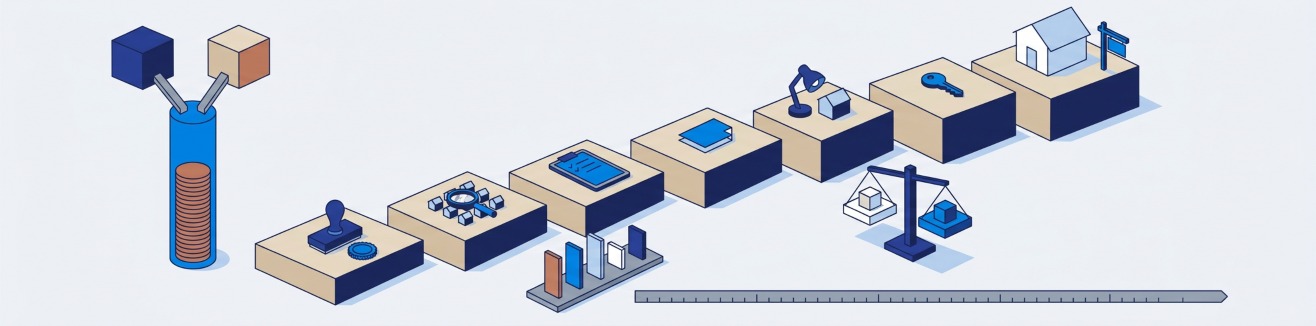
The steps, in order
- Set a budget. Separate what you qualify for on paper from what you want to spend each month.
- Get a mortgage pre-approval. This confirms your price range and holds a rate while you shop.
- Pick a real estate agent in Ottawa, or decide to handle parts of the search yourself.
- Search, view homes and make an offer, usually with conditions attached.
- Satisfy conditions, including a home inspection and final financing approval.
- Lock in your mortgage and arrange a lawyer to handle the closing paperwork.
- Close: the property changes hands, funds transfer and you receive the keys.
What closing costs to expect
Plan for 1.5% to 4% of the purchase price in closing costs on top of your down payment. The largest single item in Ontario is usually land transfer tax, which runs between roughly 0.5% and 2% of the price on a sliding scale.
- Land transfer tax: Ontario charges it on every purchase. Ottawa has no separate municipal land transfer tax, so buyers here pay only the provincial amount. Toronto is the one Ontario city that adds a municipal tax.
- First-time buyer rebate: Ontario refunds up to $4,000 of the provincial land transfer tax for eligible first-time buyers.
- Legal fees, title insurance and disbursements: commonly $1,500 to $3,000.
- Home inspection: roughly $400 to $700.
- HST: applies to newly built homes, not to resale homes, though a federal rebate can offset it for first-time buyers.
Programs for first-time buyers in 2026
Several federal programs stack together, and combined they can deliver up to about $100,000 of tax-advantaged room per person plus tax relief at closing. A first-time buyer is generally someone who has not owned or lived in a home owned by them or their spouse in the past four years.
Program | What it gives | Key detail |
|---|---|---|
FHSA | Save up to $40,000 ($8,000/yr) | Tax-deductible in, tax-free out for a first home |
Home Buyers’ Plan (HBP) | Withdraw up to $60,000 from an RRSP | Per person; couples can combine |
First-Time Buyers’ Tax Credit | Claim up to $10,000 | Worth up to $1,500 in tax relief |
30-year amortization | Lower monthly payment | Open to first-time buyers on insured mortgages |
GST rebate (new builds) | Up to $50,000 off a new home | Phases out between $1M and $1.5M |
Two changes from December 2024 still apply: the insured mortgage cap rose to $1.5 million, and 30-year amortizations opened to all first-time buyers. The older First-Time Home Buyer Incentive was discontinued in March 2024 and is no longer available.
How much mortgage you can carry
Lenders run two checks. If your down payment is under 20%, you need mortgage default insurance (often called CMHC insurance), which costs roughly 2.8% to 4% of the mortgage and protects the lender, not you. Everyone must also pass the stress test, which qualifies you at the greater of your contract rate plus 2% or 5.25%. A 30-year amortization lowers the monthly payment but raises the total interest you pay over time, so treat it as a cash-flow tool rather than free money.
A realistic first-home timeline in Ottawa
Most first-time buyers in Ottawa do not buy overnight, and recent CMHC data shows how long the run-up really takes.
- Saving for the down payment: about 3.4 years on average in 2025, down from 4.2 years the year before, helped by the FHSA and steadier rates.
- Family help is common: roughly 41% of first-time buyers received a gift toward their down payment.
- Who is buying: people aged 25 to 34 made up close to half of all first-time purchases.
- Plan for the exit too: when you eventually sell, commission is the next cost to budget for.
For the options when you sell, see the Ottawa flat-rate and discount realtor page, the Ottawa neighbourhoods overview to compare areas, and the Ottawa real estate market page for current prices.
Did you know? The First Home Savings Account launched on April 1, 2023, and within two years had become a main funding source for nearly four in ten first-time buyers.
Disclaimer: This website is an independent real estate information resource. It is not affiliated with, endorsed by, or connected to First Choice Realty Ontario Ltd. or any of its agents. Market figures are sourced from third parties, including the Ottawa Real Estate Board and the Canadian Real Estate Association, and are provided for general information only, not as financial or legal advice.